
- Home
- About Us
- Professionals
- Professionals
- Professionals

- Services
- Services
- Practice Areas
- Information Security
- News
- Database
- Contact
China Customs Released Typical IP Protection Cases for 2025
Author: Haoyu (Elliot) ZHOU
Recently, China Customs released its typical intellectual property rights (IPR) protection cases for 2025. Through random check and targeted inspection at ports, the customs have identified and seized thousands of shipments that infringe trademarks and designs. Some of the typical cases are outlined below.
Case 1 – Fake designer shoe uppers disguised as “no brand”
In September 2025, Xiamen Customs inspected a batch of shoe uppers to be exported by a Yiwu-based company. The Customs discovered 110,950 shoe uppers bearing the trademark logos of seven internationally renowned brands, including "CELINE", "MIU MIU", etc, with a total value of RMB 389,000. However, the export declaration form indicated the goods to be “no brand, no model”.
Upon confirmation by the trademark holder, all goods to be exported in this case were found to be infringing products. The Customs lawfully detained the goods and, after investigation, issued an administrative penalty ordering the confiscation of the goods and imposing a fine.
Case 2 – World Cup and FIFA Related Counterfeits Discovered at Ports of China
In December 2025, Ningbo Customs inspected goods declared as document folders and paint sets, etc., by a Yiwu-based company. The Customs discovered 5,930 dolls bearing the logos of the official mascots of the FIFA World Cup 2026 — "MAPLE," "ZAYU," and "CLUTCH" — as well as approximately 3,000 soccer balls and 3,600 keychains bearing the "FIFA" trademark.
Upon confirmation by the rights holders, all goods to be exported were found to be infringing. The Customs lawfully detained the goods and, after investigation, issued an administrative penalty ordering the confiscation of the infringing goods and imposing a fine.
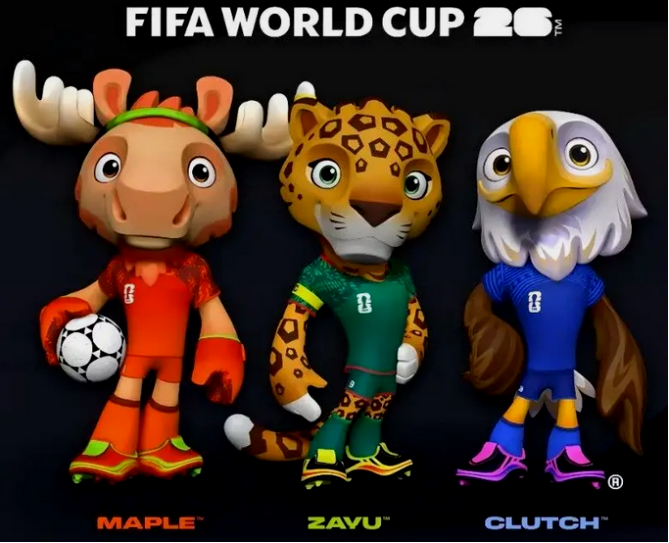
Figure 1
Case 3 – Fake Trendy Toys Detained by Customs of China
In July 2025, Tianjin Customs inspected goods declared for export and discovered 4,000 plush toys featuring the "Labubu" image as well as dolls bearing the "POP MART" trademark. Similarly, in August 2025, Beijing Customs inspected two batches of goods declared for export and discovered a total of 49,968 keychains featuring the "Labubu" image.
Upon confirmation by the right holders, all goods involved in these cases were found to be infringing. Customs lawfully detained the goods and, after investigation, issued an administrative penalty ordering the confiscation of the goods and imposing a fine.
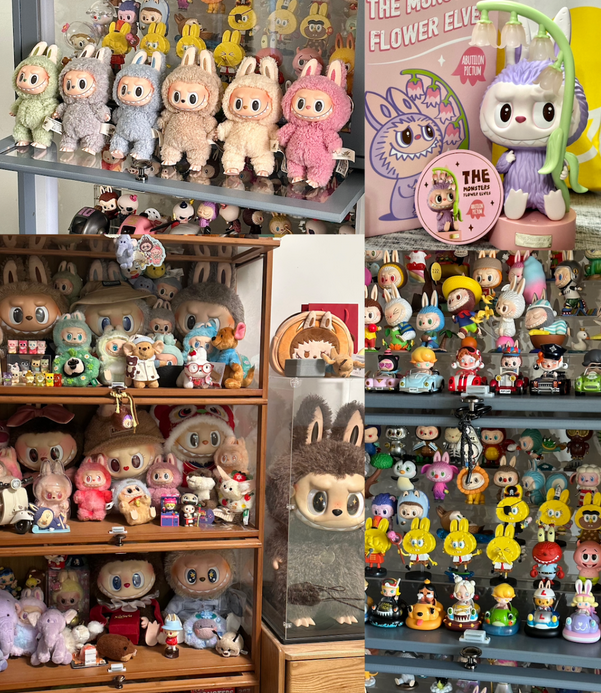
Figure 2
These cases clearly demonstrate China Customs' commitment to protecting brands, works, and designs of IP owners. The Customs not only cracks down on IP infringement within the country, but also intercepts counterfeit goods destined for export to other countries. In these cases, Customs has established rapid response mechanisms for goods that frequently face infringement, such as luxury brands, machinery parts, popular mascots and trendy toys. These mechanisms enable efficient identification and resolution of IP infringement cases at the port, promptly stopping the export of counterfeit goods.
Necessity of Recording Intellectual Properties at Customs
It is worth noting that China Customs can generally only stop what it knows to look for. To better enable Customs to prevent the export of infringing goods, IP rights holders usually need to proactively record their IP rights (i.e., trademarks, industrial designs or patents) with China Customs. Only with such recordal can Customs officers “proactively” discover leads on infringement, detain infringing goods, and notify the rights holders, significantly increasing the likelihood of enforcement at Customs.
A second advantage of recording IP rights with China Customs is that IP owners can further provide relevant clues and leads to the customs, including but not limited to the names of infringers, product names, product models, photos, shipping information, and the ports from which the suspected products are to be exported. This information helps Customs officers conduct more focused monitoring during their routine inspections, making counterfeit goods more likely to be detained as soon as they are discovered. If any infringement occurs frequently in export and import shipments, IP owners may even offer training sessions to customs, educating them how to distinguish counterfeit goods from genuine ones.
The third advantage relates to reduced financial burdens. Specifically, if IP rights are recorded with China Customs and the IP owner requests detention of counterfeit goods, the owner only needs to provide a guarantee of up to CNY 100,000 (approximately USD 14,286). In contrast, if the IP rights are not recorded, the owner may be required to provide a guarantee equal to the value of the goods to be detained—an amount that is typically higher than CNY 100,000.
If you would like to learn more about China Customs enforcement for IP cases, or how to improve the success rate by recording your IP with China Customs, please feel free to contact us at trademark@foundin.cn or patent@foundin.cn.